Universidad 2026 #Research Article
UNIVERSIDAD 2026 – Global Alliances
THE EUROPEAN CONSORTIUM OF INNOVATIVE UNIVERSITIES
By Tim Marshall
Project advisor and researcher, ECIU university
Building a borderless European University
Abstract
The European Consortium of Innovative Universities (ECIU) is a cross-border model of higher education that goes beyond traditional forms of teaching and credentialing. Founded in 1997, it is made up of twelve members —one university per country— that have demonstrated their significance within regional innovation systems and have a proven record of university-industry collaboration. These universities share core values of open-mindedness, cooperation, diversity, and intercultural understanding.
The ECIU aims to expand, incorporating new members from other continents. Its goal for 2030 is to become a fully recognized European university in its own right, with a hybrid continental campus and four main pillars: education, research, innovation, and social service — all designed to address real-world challenges. To achieve this, it employs a pedagogical model based on personalized and flexible Challenge-Based Learning (CBL) pathways, along with a system of digital micro-credentials that certify acquired skills and academic achievements.
The consortium has become a reference point in the field of micro-credentials within the European Universities Alliances initiative. All this is achieved through the synergies of its members: every participating university contributes to a shared pool of expert knowledge, thanks to a four-year initiative (2022–2026) known as ECIUn+, which expands the joint offering of educational modules, referred to as ELOs (ECIU University Learning Opportunities). This, in turn, promotes student mobility and cross-border learning, as well as the physical, intellectual, and cultural mobility of teachers.
Looking to the future, ECIU seeks to continue developing the digital experience, lifelong learning, collaborations with industry, support for the European Competitiveness Fund and the European degree, reaching more students and professionals through training programs, and creating new ELOs and micro-credentials. Its ultimate goal is to put at the service of society an innovative, collaborative, and distinctly European model of knowledge creation.
Introduction
In a rapidly changing world, where knowledge, technology, and societal challenges are deeply intertwined, higher education must evolve beyond traditional degrees and forms of teaching. The European Consortium of Innovative Universities (ECIU) is doing exactly that.
Established in 1997, the ECIU is a close-knit network comprising 12 members from four geographical regions of Europe, along with one non-EU associate overseas. Currently, ECIU is expanding to include additional associates, incorporating good practices in education and research from non-EU universities.
All ECIU partners are selected based on a shared profile, which includes a significant role in regional innovation systems and a proven track record in university-industry interactions. The partners are dedicated to fostering an entrepreneurial mindset among students and staff and are committed to innovation in teaching and learning to enhance societal impact. At the heart of ECIU lies a strong sense of shared European values: openness, collaboration, diversity, and intercultural understanding. Each member institution contributes its distinct strengths, cultural perspectives, and local connections.
Only one university per country can be an ECIU partner; the idea is to keep the ECIU a small and very active network in which partners know each other well and maintain a direct and frequent communication line.
New members should be in line with the central characteristics of the ECIU:
Our vision: a fully-fledged European university
For more than 25 years, the ECIU partners have been gaining innovative force through the pooling of expertise, mutual learning and joint projects. Since the beginning, ECIU has offered a platform to connect the regional innovation ecosystems across Europe. Our aim is to be a fully-fledged European University by 2030, with a hybrid European campus known as the ECIU University. This will cover four missions: Education, Research, Innovation and Service to Society. As outlined in Vision 2030 (developed in 2020), ECIU University offers a platform where students, lifelong learners, teachers, researchers, businesses and societal stakeholders collaborate to solve real-world challenges. Through collaboration in education and research, societal challenges are approached in a multidisciplinary, entrepreneurial way. ECIU University aims to be an important player in innovation in European higher education. Our educational vision is based on highly personalised, flexible and challenge-based learning pathways with a strong focus on research-based micro-modules. The educational model of ECIU University serves students and continuous learners looking for reskilling and upskilling in different fields. Through this, ECIU University prepares learners as global citizens and responsible leaders capable of tackling the complex societal challenges of the 21st century.
The ECIUn+ Project: deepening collaboration and building Flexible Learning Pathways
From 2022 to 2026, ECIU’s is deepening its collaboration through the ECIUn+ project, an initiative that expands the consortium’s shared portfolio of ECIU University learning opportunities (ELOs) and builds the structures needed for long-term sustainability. This project enables all member universities to pool their expertise, offering a wide range of subjects and specialisations that reflect their local strengths — from digital transformation to sustainability, urban mobility, health, and inclusion.
‘The alliance has elevated our longstanding collaboration to new heights, empowering us to innovate collectively across our partner institutions. By establishing sustainable structures and processes, we are committed to creating lasting benefits for students, staff, and the communities we serve, ensuring that our shared mission fosters enriching learning and research opportunities together with our regions and by that strengthening societal impact.’– Katrin Dircksen, ECIU Secretary General, University of Twente
The core of the ECIU University educational offer is our flexible learning pathway (FLP). The ECIU’s version of the FLP concept originated in 2022 during the pilot phase of the ECIUn+. Its goal was to allow each learner to choose a personalised learning path independently of their prior background by taking ELOs across our 12 partner universities. This enables learners to acquire knowledge, skills and competencies in a wide range of areas within the shared portfolio. These can be either broad or deep, meaning learners can select different ELOs each time or focus on closely related ELOs to enhance their expertise in specific areas.
ELOs are available in two formats: Challenges and micro-modules. Most Challenges adopt the innovative challenge-based learning (CBL) pedagogical model, which represents a major shift from traditional lecture-based education. CBL is often described as a ‘bridge from the classroom to the real world’, allowing students to work directly on societal issues proposed by external stakeholders, including businesses, public sector organisations, or universities.
These Challenges are inherently multidisciplinary, demanding teams of learners from diverse fields and countries to work together, innovate and develop solutions with societal impact. The teacher’s role is also evolving from simply imparting knowledge to acting as a mentor, guide, and facilitator – what we refer to as a ‘teamcher’ in ECIU. University.
As a result, we have built a continually growing community of CBL educators and researchers, enhancing our ability to increase the number of Challenges and share best practices in CBL implementation. This was documented in a 2025 publication from the University of Stavanger, an ECIU member, titled ‘A Practical Guide to Understanding and Implementing Challenge-Based Learning’. The book features examples of CBL across various contexts in eight ECIU universities and serves as a resource for teachers both within and beyond the consortium to develop their own CBL courses.
Complementing this approach is ECIU University’s innovative system of digital micro-credentials. Each credential represents a verified, shareable record of a learner’s skills or achievements. They can be combined, stacked, and recognised across all partner universities. This enables students to build a personal learning portfolio that emphasises their true abilities and strengths, rather than merely displaying what degree they hold. It supports a flexible, lifelong learning approach that reflects real-world learning and working practices.
‘ECIU University is a hands-on experience,’ says João, a bachelor’s student in environmental engineering from the University of Aveiro. ‘In Challenges, instead of sitting in lectures all the time, we work on real problems in teams from all over Europe. The micro-modules let us add specific skills when we need them, and the digital certificates show exactly what we’ve learned.’
Our Digital Experience Platform (DXP), also known as the Engage portal, is central to this. Accessible at Engage.eciu.eu, it offers a seamless digital environment where learners can explore and enrol in Challenges and micro-modules. Students can also get guidance through the motivation scan or soon, by interacting with a chatbot that helps identify the best courses for their study needs. Additionally, each learner has a unique competence passport where their micro-credentials are stored, along with visual summaries of their progress in various skills and competencies.
Ensuring quality and relevance
In fact, ECIU has led the European Alliances in its approach to micro-credentialling and micro-credentials. One of the most significant impacts has been to develop a centralised approach to the issuing of micro-credentials on behalf of the ECIU University Alliance. This approach is based on European and international standards for verifiable digital credentialling.
We built the approach around several key decisions and principles. These included ensuring that we complied with the guidance for micro-credentials provided in the 2022 Council of the European Union Recommendation on micro-credentials. We leveraged European infrastructure and the European Learning Model through the European Digital Credential Platform. This allowed for collaboration with the ECIU University’s Digital platform, providing a central competence for the ECIU institutions and helping adopt a centralised approach to eSealing the micro-credentials awarded by these institutions.
Our mission has been to ensure that micro-credentials build upon the European Higher Education Area tools and practices, and, through our activities in the ECIU University, we have been able to illustrate how tools like ECTs (European Credit Transfer and Accumulation System (ECTS) and ESGs (Environmental, Social, and Governance programme) can be brought to life in an Alliance context.
ECIU University has now issued thousands of micro-credentials to learners across Europe. Each one of those micro-credentials can be uploaded into the ECIU Competence passport or into comparable systems such as Europass by the learner. By doing this, we have illustrated how credentials are owned and managed by the learner which is a paradigm shift in the grander scheme of how traditional credentials have been thought about. Learners can share their micro-credential with other education and training organisations and with other stakeholders such as employers. Although we have achieved so much with micro-credentials, we want to progress further.
One of our aims is to help remove systemic barriers to their recognition within wider contexts and across Europe. We will continue to play an advocacy role for flexible learning pathways and micro-credentials. We know that lifelong learning is one of the key elements of the European agenda. The ECIU, in collaboration with its stakeholders at European and national levels, intends to ensure that flexible and personalised learning is recognised and valued within the wider European ecosystem, as learning is a core ECIU and European value.
A model of student-led co-creation
One of our greatest assets is our inclusion of learners in the development of tasks within the ECIUn+ project. The network’s students have organised themselves into the ECIU Student Council, which provides feedback into the project’s management and governance structures. Additionally, institutions have appointed Student Ambassadors, who help promote ECIU University locally and have independently begun working on projects with peers from other universities.
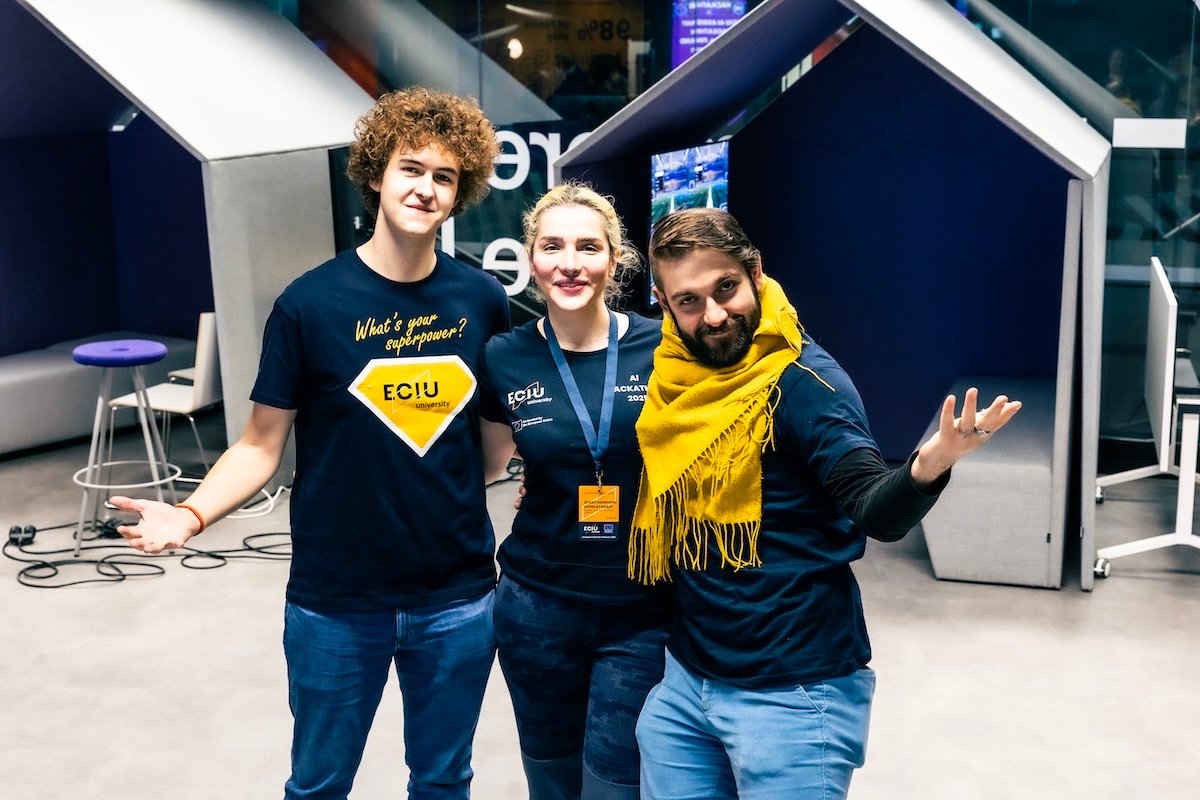
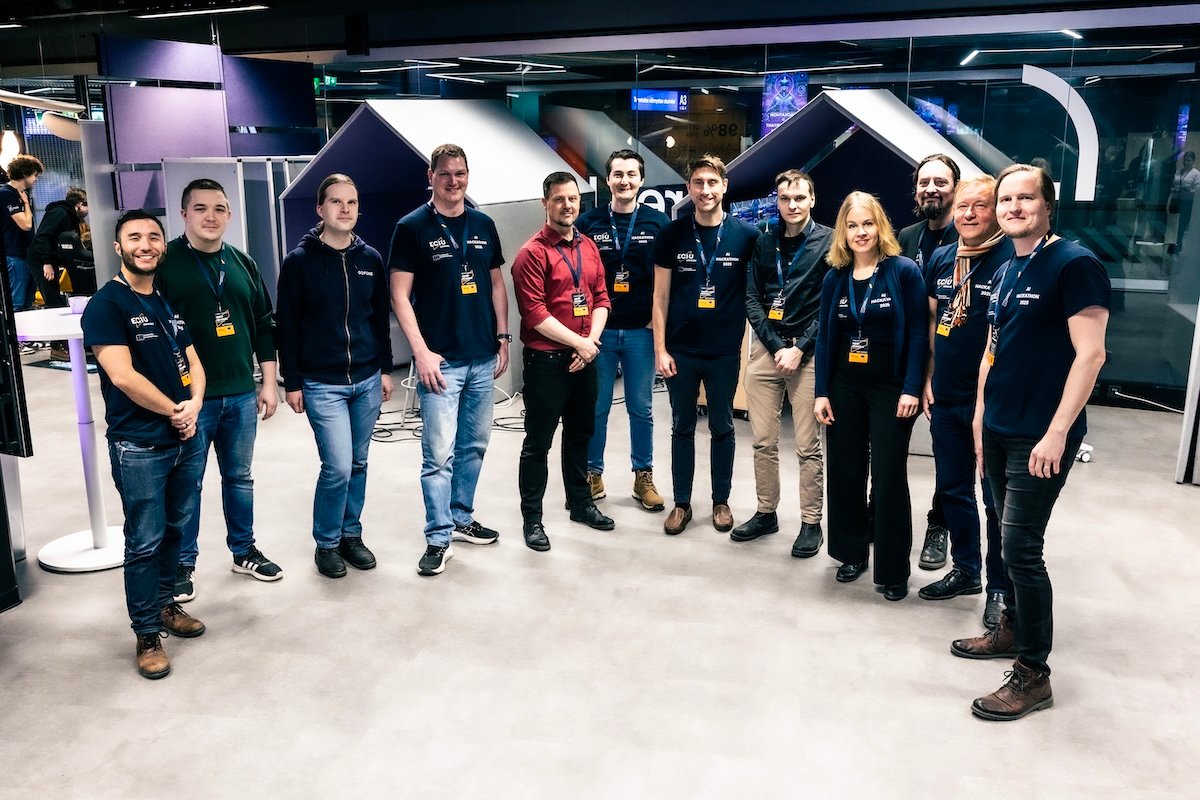
This March, we held the first AI learner guidance assistant Hackathon at the University of Tampere in Finland. This was the largest multinational on-site event organised by the university, with students coming from eight different ECIU partners. Students were able to work with leading Finnish technology companies to prototype innovative educational chatbots and avatar-based learner support systems in a fast-paced, hackathon setting. The results achieved in just a few days were truly impressive, as Daniyar Zhumatayev, a bachelor’s student in Information Technology from the University of Łódź says:
‘The Hackathon in Tampere was truly a highlight of my academic journey so far. Beyond the technical skills, I took away valuable connections and memories, and these kinds of experiences are what make the ECIU network so valuable for students like us.’
The outputs from this hackathon will be developed into the final AI learner guidance assistant that will be on the Engage platform to support all ECIU University students in their educational choices.
In addition, we have also run two user-experience focus groups at the University of Twente in the Netherlands, uniting students who are familiar with the ECIU University and those who are new to these opportunities. These focus groups look at all aspects of the student user journey from the first time they hear about the ECIU until they return from a trip to an ECIU Challenge and everything in between.
We want to continually improve our offers and experiences for the students, and their feedback and suggestions at such events are invaluable
Mobility and community: learning beyond borders
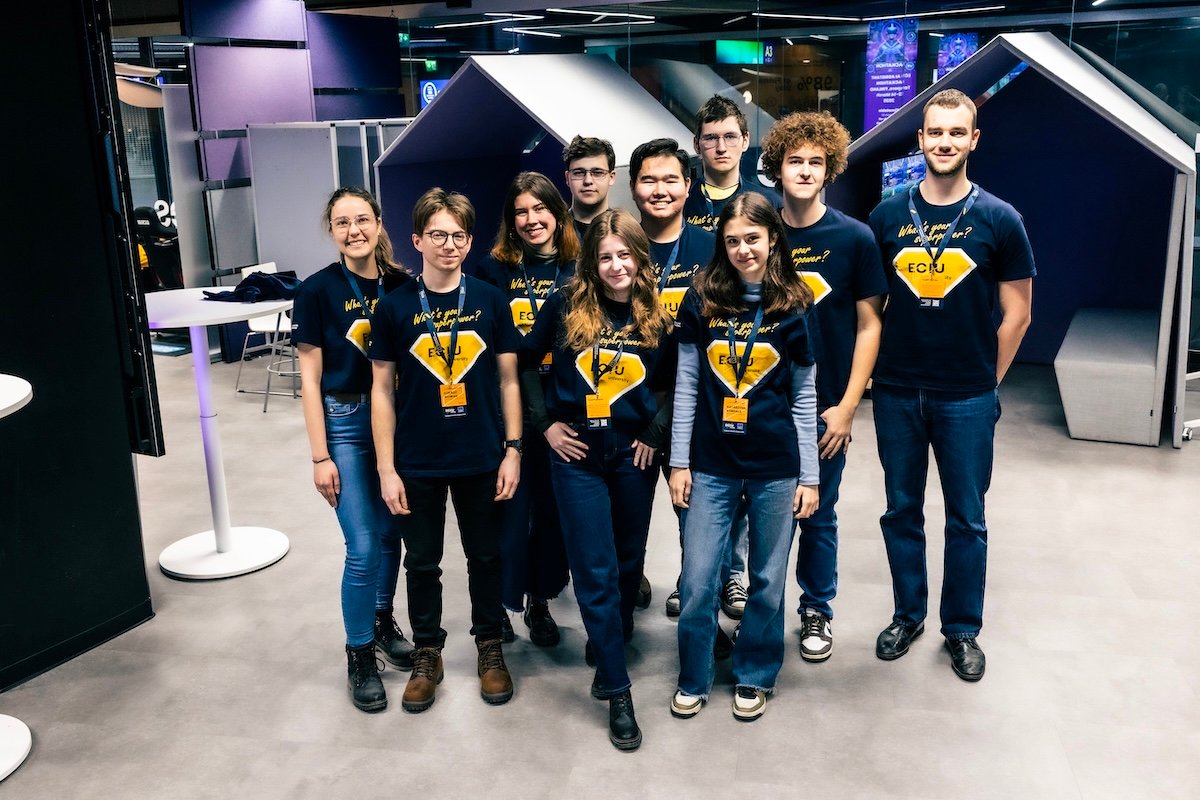
These events are an example of ECIU University’s strong emphasis on mobility — not only physical but intellectual and cultural. All changes involve multidisciplinary and multi-university teams, encouraging students to work with peers from other countries, either on-site or virtually. This mobility does not just enrich learning; it broadens perspectives. Students experience different academic cultures, encounter new ways of thinking, and develop transversal skills such as communication, collaboration, empathy and conflict resolution. This equips them with the skills they need not just for the 21st-century workplace, but also to be responsible and engaged global citizens.
‘Beyond academic achievements,’ Joao reflects, ‘ECIU University allowed me to build friendships across cultures and disciplines. The collaborative nature of the challenges created an international community where teamwork and exchange of ideas thrived.’
Faculty and staff are equally engaged in this community. ECIU University offers networking events, training sessions, and communities of practice, where educators and researchers share experiences and co-develop innovative teaching methods.
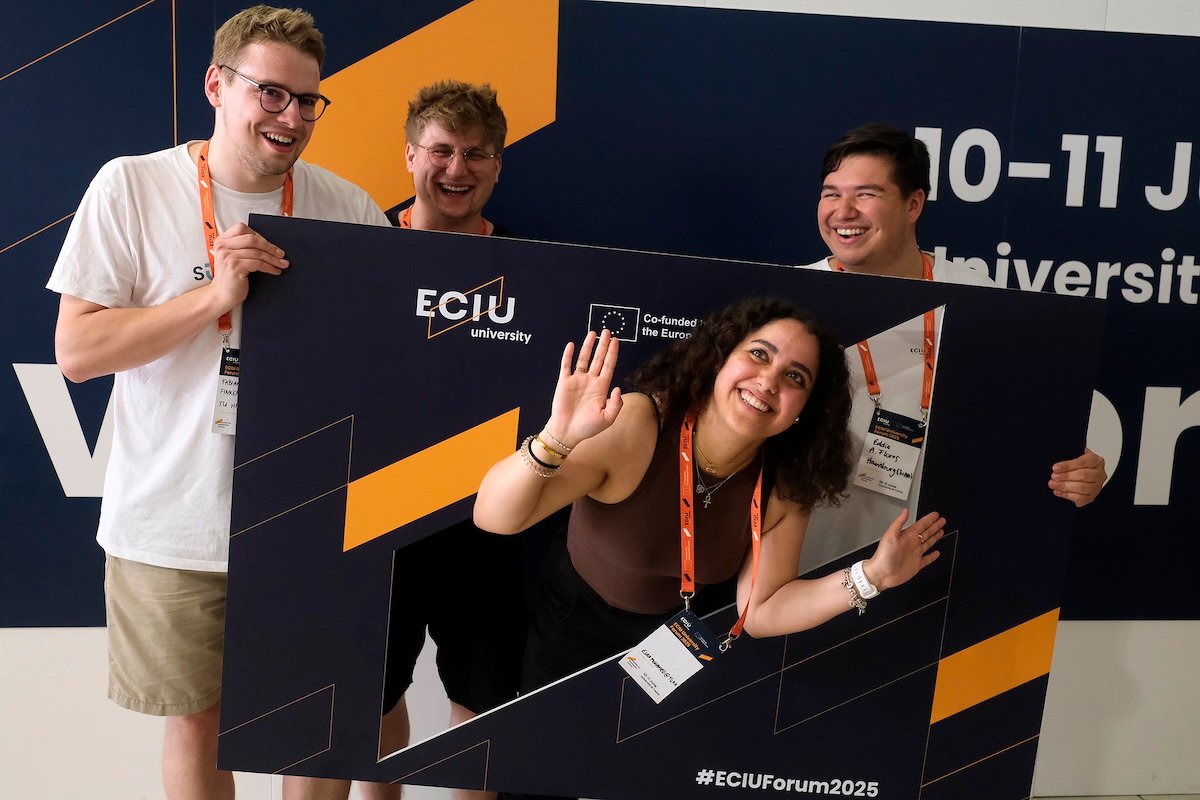
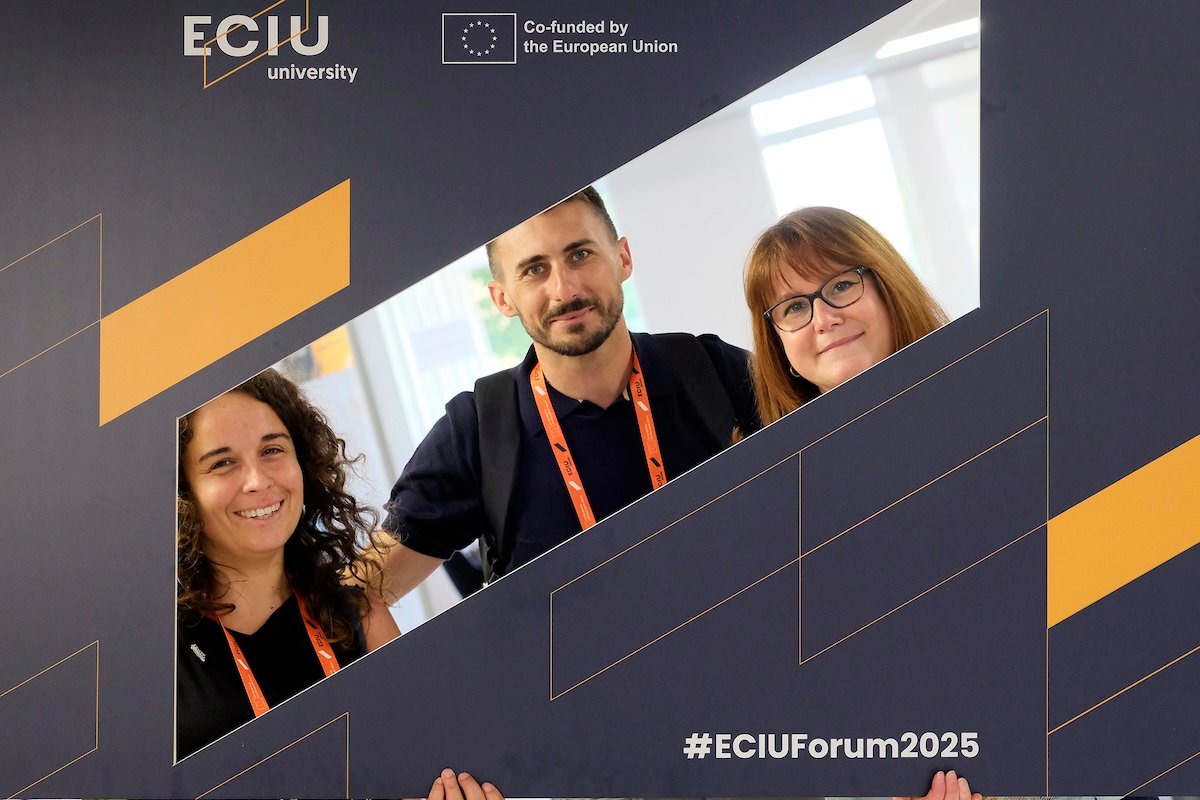
Each year, the ECIU University Forum brings together hundreds of students, teachers, and staff to exchange ideas, showcase projects, and celebrate collective achievements. The energy and creativity at these gatherings illustrate the consortium’s growing identity as a pan-European learning ecosystem.
This year’s Forum was held at the University of Trento in Italy, with 230 attendees from all over Europe and Tecnológico de Monterrey from Mexico, including learners, teachers, staff, researchers and external stakeholders. The theme was Innovation for Sustainable Futures, with 23 training sessions, workshops and discussions taking place across 4 different venues. The goal was to inspire collaboration for a sustainable future, all while connecting across different disciplines and cultures.
‘What strikes me most about ECIU is its versatility as both a space for learning and for creation — a fertile ground where people of different ages, nationalities, and disciplines can grow together.’ – Letizia Bontempi from the University of Trento
Next steps and long-term success
We have several priorities to ensure our future long-term success. These include further DXP developments, continuous education, future cooperation with industry, the European Degree and the Competitiveness Fund, strengthening our strategy, maintaining our strong profile among alliances, reaching more students and staff with offers of training and events, developing ELOs and more micro-credentials, and sharing our successes in the media.
As mentioned, the ECIU Vision 2030 is based on a broader vision of an open community, cutting-edge tech, an innovative co-creation model and European education and research. We constantly reflect on the extent to which we have remained faithful to that vision. It also considers changing socioeconomic forces, advances in higher education teaching and learning methods, and the shifting learning needs of students, all of which call for institutional development and continual innovation. Change urges us to have a planning process that connects long-term vision with short-term action.
Despite the opportunities that a university network approach may promise in terms of economies of scale, the convergence of national legislation and individual institutional strategies creates challenges. Therefore, the ECIU Consortium acts as an enabler of institutional transformation at the level of its partner universities. That is why its founding charter centres on ‘the usefulness of sharing experience as entrepreneurial universities’, towards ‘developing international programmes affecting curricula, research and regional development’ and forming ‘enduring partnerships with businesses, industry and government’.
For the ECIU, success cannot be measured solely in numbers. Instead, success means empowered learners, stronger societies, and lasting change. In the long run, we envision that students will be able to mix and match learning experiences across all partner universities, with seamless credit recognition. This would require greater alignment of curricula across partner institutions, ensuring that ECIU University ELOs are fully recognised as part of degree programs.
In an era defined by complexity, the ECIU University offers a simple yet powerful idea: when we learn together, we solve together. And in doing so, we create not only smarter universities — but a stronger, more united Europe.
Authors: Tim Marshall, Anastasiya Bukhtiarova, Katrin Dircksen, Niall Power, Mairéad Nic Giolla Mhichíl
Contributors – Gerda Jakutytė, Sandra Antanaviciene, Eddie Arriaga Flores, Letizia Bontempi, João Santos, Andrea Brose

This article is available in Spanish via Nueva Revista. Click HERE.
Universidad 2026 is a publication by:
Nueva Revista
Nueva Revista is a Spanish publication dedicated to analyzing contemporary society, focusing on culture, humanities, science, art, and politics. It offers in-depth analysis and expert perspectives on topics such as higher education innovation, technological advancements, social change, and public policy. Featuring contributions from renowned academics, writers, and thought leaders, the magazine fosters critical dialogue and intellectual debate, making it a key reference for those interested in the intersection of knowledge, society, and progress.
If you’d like to read this year’s edition of University 2025 in Spanish, please click below:

In collaboration with Proeduca
PROEDUCA’s objective is to provide the best online higher education to its students and it achieves this through educational commitments at three universities: The International University of La Rioja, the Online University of Mexico (UNIR Mexico), and CUNIMAD. It also offers studies located in Peru, at the Newman Postgraduate School, and in the United States, where it has a presence through MIU City University Miami.