Universidad 2026 #Research Article
UNIVERSIDAD 2026 – Global Alliances
FUTURE UNIVERSITIES ALLIANCE
By Noah Pickus
Head of Global Strategy and Partnerships, Senior Advisor to the Provost, and Professor of the Practice of Public Policy, Duke University
A Global Alliance for Innovation and Access
Abstract
Contemporary higher education faces challenges that recognize no borders. No single institution, however extensive its resources, is capable of addressing these challenges alone. Meeting them requires both the experience of long-established universities and the agility and creativity of newer ones. The author’s professional trajectory has enabled him to observe innovative practices in areas such as academic models, access pathways, funding mechanisms, and curricula that extend beyond the traditional classroom. It has also led him to embrace the educational philosophy he advocates: rooted globalism, that is, cultivating clearly local roots while fully engaging in the global ecosystem. In other words, broadening students’ horizons and fostering a stronger sense of belonging and purpose.
He concludes that there is no single, unified, self-sufficient approach capable of responding to all the current demands of higher education. Universities must reinvent themselves and learn from one another in ways that are more open and systematic than existing structures allow. This conviction led him to found the Future Universities Alliance, which is currently being developed at Duke University.
The long-term vision is for this alliance to become a trusted international resource and a catalyst for educational transformation, ultimately giving rise to an ecosystem grounded in shared experience. Its overarching aim is to accelerate access to high-quality higher education within each institution and to close educational gaps worldwide. In 2026, the Future Universities Alliance will be officially launched, with the intention of bringing together universities of all kinds, philanthropic foundations, governments, advisors, and experts.
Introduction
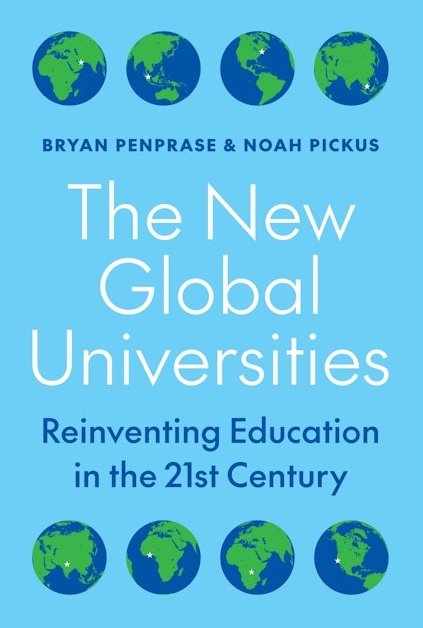
Several years ago, while researching my book, co-authored with Bryan Penprase, The New Global Universities: Reinventing Education in the 21st Century, I spent time with leaders of startup universities across Asia, Africa, Latin America, and the Middle East. Many were building institutions from the ground up—metaphorically and literally. Despite working in makeshift contexts, often with limited resources, the founders I met were steadfast in their vision for change. They weren’t trying to discard the lessons of established universities, nor were they content to copy them. Instead, they borrowed wisely, adapted thoughtfully, and innovated across domains they believed required significant rethinking. The mix of pragmatism and ambition was unmistakable and deeply inspiring.
Higher education today faces challenges that cut across borders: widening social polarization, uneven economic development, rapid technological disruption, and growing climate instability. No single institution, no matter how well resourced, can navigate these forces alone. Established universities bring depth, experience, and scale; newer institutions bring agility, fresh perspectives, and a willingness to rethink ossified assumptions. When they work together rather than in isolation, each strengthens the other. In my travels, I have seen how startup universities often served as early testing grounds for new ideas and catalysts for change, while long-standing institutions offered the infrastructure and expertise to refine and scale promising ideas. Together, they formed a dynamic ecosystem of experimentation capable of generating solutions none could produce on their own.
Repeatedly, I watched leaders turn scarcity into creativity, using constraints not as excuses but as catalysts. Across settings and continents, the combination of conviction and ingenuity has been striking. In one place, reinvention meant a bold academic model that challenged assumptions about how students should learn. In another, it meant designing new pathways for learners who had long been shut out. I have watched as universities pursue alternative funding structures, reshaped governance, and designed curricula that extended beyond the classroom and into the surrounding ecosystem. And sometimes the innovations were more philosophical. For example, I have observed institutions embrace what I’ve come to call “rooted globalism” — the belief that a university can be unmistakably grounded in its local context while still deeply enmeshed within a global ecosystem.
Rooted Globalism
Rooted globalism is only one educational philosophy among many, but it has shaped my thinking in meaningful ways. At Duke Kunshan University, where I helped design the academic model, we constantly asked ourselves how to build a joint venture that was authentically anchored in its Chinese context while remaining deeply connected to global research, teaching, and collaboration. Later, as Chief Academic Officer at Minerva Project, I saw firsthand how a deliberately designed pedagogy paired with a multi-city global experience could achieve two seemingly paradoxical goals: widening students’ perspectives while deepening their sense of place and purpose.
But my larger realization, which has been reinforced over years of conversations with administrators, faculty, and students, has been this: no single approach is sufficient. No one curriculum model, governance structure, financial model, or theory of change will fully meet the demands facing higher education today. Universities need many ways to reinvent themselves, and they need to learn from one another more openly and systematically than our current structures allow.
The birth of the Alliance
This conviction eventually led to me to found the Future Universities Alliance, now being incubated at Duke University.
The Future Universities Alliance is not focused on replicating a single best practice or educational model. It’s about building a global community where institutions—emerging and established, large and small, public and private—can tackle shared challenges together. We want to provide a structured way for universities to compare notes, borrow ideas, and adapt them to their own contexts. For some institutions, this may mean reimagining the curriculum by integrating interdisciplinary approaches, redesigning foundational courses, or embedding community-engaged learning into the core. Others may explore new pedagogies supported by technology, experiment with flexible learning pathways, or create more holistic systems to support student success. Some will test new models of academic governance or partnerships that link classroom learning to real-world challenges.
The point is not uniformity. It’s collective progress. Not a single model for all, but a culture in which institutions learn from one another’s experiences and, just as importantly, work together to create solutions that none could develop alone. This model addresses the challenge faced in diffusing innovations by promoting the borrowing, testing, and scaling of successful practices. It challenges the idea that education is solely a race, embraces the reality that vibrant sectors involve both cooperation and competition, and rejects outdated models of cultural transfer that involve exporting one educational system to another.
Previous steps: The New Global Universities Summit
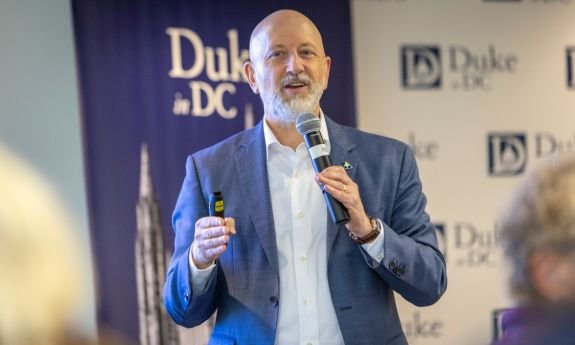
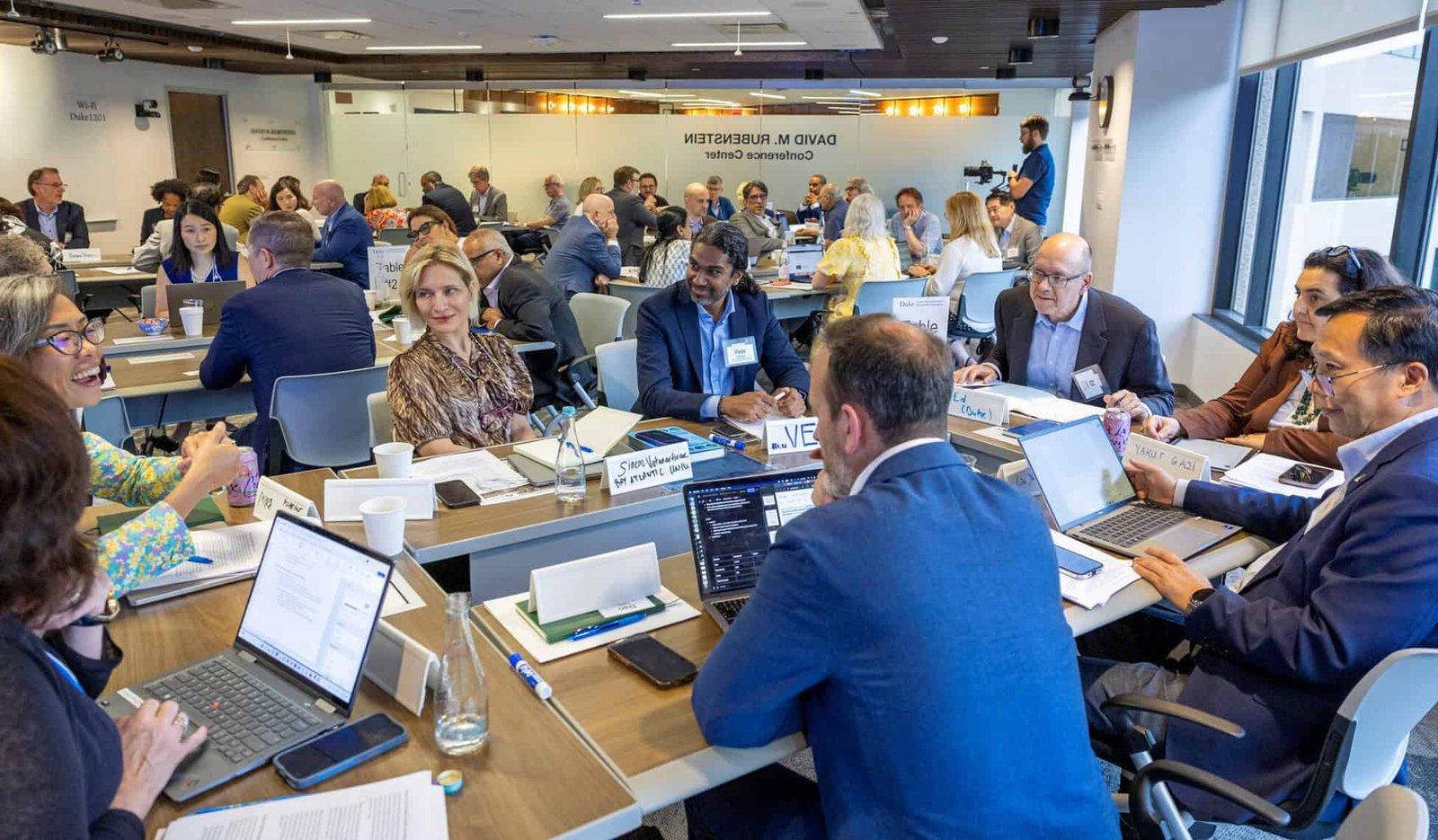
I saw the appetite for this clearly at the New Global Universities Summit we hosted in 2024. The gathering brought together participants from vastly different contexts and with distinct educational philosophies—some representing institutions less than a decade old, others coming from long-established, name-brand universities. Despite those differences, the leaders in the room kept returning to the same themes: the urgency of innovation, the value of shared experimentation, and the need for a community where institutions could speak candidly about what they were trying and what they were learning. Their enthusiasm and willingness to test ideas across contexts made it clear that the Future Universities Alliance was not only timely but necessary.
The Future Universities Alliance will build on that spirit by connecting emerging institutions and established universities in several complementary ways. A core offering will be a yearlong Innovation Sandbox, where teams from selected institutions design, test, and refine new approaches to common challenges in a structured, collaborative environment. We will pair the Sandbox with an annual Global Summit that brings leaders together to reflect on what they’ve learned and to chart priorities for the year ahead. And we will share insights widely through leadership consultancies and a knowledge platform that features curated models, tools, and thought leadership drawn from our work across a network of institutions.
The pathway ahead
If the Future Universities Alliance succeeds, it will help universities around the world become more agile and more responsive to the needs of students, communities, and societies. It will help institutions not only expand access but strengthen quality. And it will make it easier for governments, philanthropies, and educators to see what works, what doesn’t, and why.
When I reflect on the long history of higher education, I’m reminded that the academy has always evolved through improvisation and partnership. The Future Universities Alliance is an effort to channel today’s energy and sense of urgency on a global scale—to bring together institutions that want not only to meet the moment on their own campuses, but to shape the future of higher education everywhere.
If we get this right, we will resist the temptation to replicate a single model across countries and contexts. Instead, we will support universities in becoming the first and best versions of themselves—rooted in their own identities, informed by global insight, and committed to expanding quality opportunities for more students in more places.
Author: Noah Pickus. Head of Global Strategy and Partnerships, Senior Advisor to the Provost, and Professor of the Practice of Public Policy, Duke University

This article is available in Spanish via Nueva Revista. Click HERE.
Universidad 2026 is a publication by:
Nueva Revista
Nueva Revista is a Spanish publication dedicated to analyzing contemporary society, focusing on culture, humanities, science, art, and politics. It offers in-depth analysis and expert perspectives on topics such as higher education innovation, technological advancements, social change, and public policy. Featuring contributions from renowned academics, writers, and thought leaders, the magazine fosters critical dialogue and intellectual debate, making it a key reference for those interested in the intersection of knowledge, society, and progress.
If you’d like to read this year’s edition of University 2025 in Spanish, please click below:

In collaboration with Proeduca
PROEDUCA’s objective is to provide the best online higher education to its students and it achieves this through educational commitments at three universities: The International University of La Rioja, the Online University of Mexico (UNIR Mexico), and CUNIMAD. It also offers studies located in Peru, at the Newman Postgraduate School, and in the United States, where it has a presence through MIU City University Miami.